
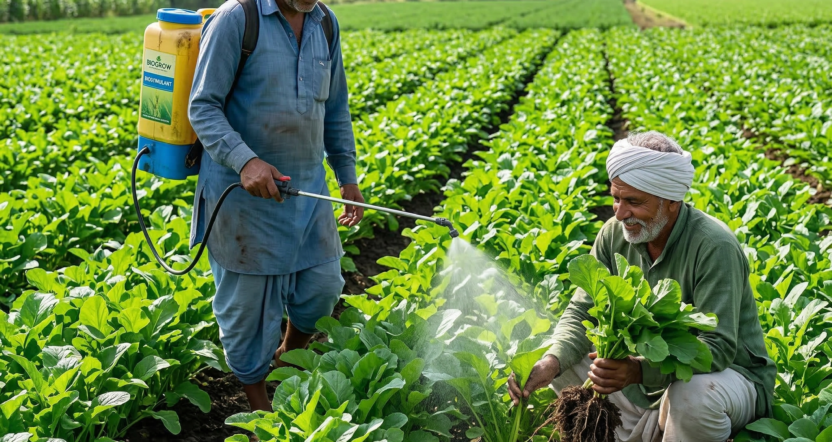
Farming is changing with time. Today, farmers are not only focusing on yield, but also on soil health and long term sustainability. One important solution that is gaining attention is the use of biostimulants.
Many farmers hear this word but are not fully clear about what it means. Biostimulants are not fertilizers and not pesticides. They work in a different way. They help plants grow stronger, use nutrients better, and face stress conditions more effectively.
In this article, let us understand biostimulants in a simple way and how they can help farmers improve crop performance.
What Are Biostimulants
Biostimulants are natural or biological substances that improve plant growth and health. They do not directly supply nutrients like fertilizers. Instead, they help plants use available nutrients more efficiently.
These products may contain seaweed extracts, amino acids, humic substances, or beneficial microbes. When applied to crops, they support root development, improve nutrient uptake, and enhance overall plant strength.
Question. Are biostimulants fertilizers.
Answer. No. Biostimulants do not replace fertilizers. They help plants use nutrients better.
Why Farmers Are Using Biostimulants
Farmers are facing many challenges today. Soil quality is reducing, climate conditions are changing, and crops are exposed to more stress. Biostimulants help farmers manage these challenges.
They improve plant strength, increase resistance to stress, and support better growth. Many farmers are now using biostimulants along with fertilizers to get better results.
Question. Why are biostimulants becoming popular.
Answer. Because they help crops grow better even under stress conditions and improve overall productivity.
How Biostimulants Help Crops
Biostimulants support plants in many ways. They improve root growth, enhance nutrient absorption, and strengthen plant metabolism.
When roots grow deeper and stronger, plants can absorb more nutrients and water from the soil. This leads to better crop growth and improved yield.
Biostimulants also help plants tolerate stress such as drought, heat, or poor soil conditions.
Question. Do biostimulants increase crop yield.
Answer. Yes. They support better plant growth which can lead to improved yield.
Types Of Biostimulants
There are different types of biostimulants available for farmers. Each type works in a specific way.
Seaweed extracts help improve plant growth and stress tolerance
Amino acids support plant metabolism and recovery
Humic and fulvic acids improve soil structure and nutrient availability
Microbial biostimulants support soil health and root activity
Farmers can choose products based on crop needs and field conditions.
Question. Can all crops use biostimulants.
Answer. Yes. Biostimulants can be used for most crops including cereals, vegetables, and fruits.
Biostimulants And Soil Health
Biostimulants do not only help plants. They also improve soil health. Some products support beneficial microorganisms in the soil.
Healthy soil leads to better nutrient availability and stronger plant growth. Over time, this improves the overall productivity of the field.
Using biostimulants along with organic matter can give even better results.
Question. Do biostimulants improve soil fertility.
Answer. Yes. They support soil microbes and improve nutrient availability.
Use During Stress Conditions
Crops often face stress due to drought, high temperature, or poor soil conditions. During these times, plants become weak and growth slows down.
Biostimulants help plants manage stress better. They support plant recovery and maintain growth even in difficult conditions.
This is especially useful in areas where weather conditions are unpredictable.
Question. When should farmers use biostimulants.
Answer. They can be used during growth stages and especially during stress conditions.
How To Apply Biostimulants
Biostimulants can be applied in different ways. Farmers can use them as foliar spray or apply them to the soil.
Foliar spray helps quick absorption through leaves
Soil application supports root development
Farmers should follow the recommended dosage and timing for best results.
Question. Can biostimulants be mixed with fertilizers.
Answer. Yes. Most biostimulants can be used along with fertilizers.
Benefits Of Using Biostimulants
Farmers can see multiple benefits by using biostimulants in their fields
- Improved root growth
- Better nutrient absorption
- Increased resistance to stress
- Healthier crops
- Better yield quality
These benefits help farmers improve both productivity and profitability.
Biostimulants And Sustainable Farming
Sustainable farming means protecting soil, water, and the environment while growing crops. Biostimulants support this approach.
They reduce dependency on excessive chemical inputs and promote natural plant growth. This helps maintain soil health for future farming.
Farmers who use biostimulants are taking a step towards more sustainable agriculture.
Question. Are biostimulants safe for the environment.
Answer. Yes. Most biostimulants are natural and safe for soil and crops.
Final Thoughts
Biostimulants are becoming an important part of modern farming. They do not replace fertilizers or pesticides, but they support crops in a natural and effective way.
By improving plant strength, supporting soil health, and helping crops handle stress, biostimulants offer a practical solution for better farming.
Farmers who understand and use biostimulants properly can achieve better crop performance and long term sustainability.