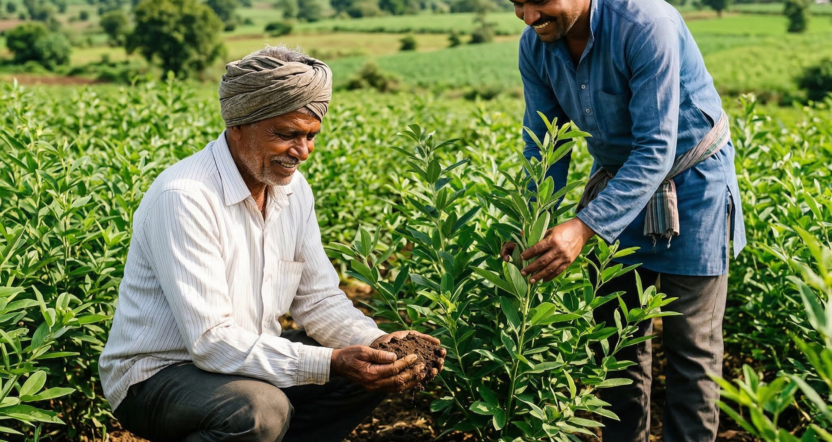
Soil is the heart of farming. Every crop that grows in the field depends on the strength and health of the soil. When soil is rich and balanced, plants grow stronger, crops give better yield, and the farm remains productive for many years. When soil becomes weak or depleted, crops struggle to grow and farmers face lower production.
Many farmers focus mainly on seeds, fertilizers, and irrigation. These are important, but soil health is the real foundation behind successful farming. Soil health management simply means taking care of the soil so that it remains fertile, active, and productive over time.
In this article, we will understand how soil health management improves crop yield and supports sustainable farming.
Understanding Soil Health
Healthy soil contains a balanced mix of nutrients, organic matter, water, air, and beneficial microorganisms. These components work together to support plant growth.
When soil is healthy, it allows roots to grow deeper. Strong roots help plants absorb nutrients and water efficiently. This leads to better plant growth and higher crop yield.
Poor soil conditions can reduce plant growth. Crops may appear weak, leaves may turn yellow, and production may drop. This is why soil management is essential for every farmer.
Question. What is soil health in simple words.
Answer. Soil health means the soil has enough nutrients, organic matter, and beneficial organisms to support strong plant growth.
Why Soil Health Is Important For Crop Yield
Healthy soil supports plant growth in many ways. It stores nutrients, holds moisture, and supports beneficial microbes that help plants absorb nutrients.
When soil is managed properly, plants grow stronger and produce better harvests. Healthy plants are also more resistant to pests, diseases, and environmental stress.
Poor soil management often leads to reduced productivity. Crops may require more fertilizers but still produce lower yields.
Question. Can soil health directly affect crop yield.
Answer. Yes. Healthy soil allows plants to absorb nutrients efficiently, which improves growth and increases crop production.
The Role Of Organic Matter In Soil
Organic matter plays a very important role in soil health. It improves soil structure, increases water holding capacity, and supports microbial activity.
Materials such as compost, crop residue, and farmyard manure add organic matter to the soil. Over time, these materials break down and enrich the soil.
Organic matter also improves soil aeration. When soil has good structure, plant roots grow easily and access nutrients more efficiently.
Question. Why should farmers add organic matter to the soil.
Answer. Organic matter improves soil fertility, helps retain moisture, and supports beneficial microorganisms.
Soil Microorganisms And Their Benefits
Healthy soil contains millions of microorganisms. These tiny living organisms play a big role in improving soil fertility.
They help break down organic matter and convert nutrients into forms that plants can absorb. Some microbes also help plants resist diseases.
When soil biology is active, plants grow stronger and healthier. Excessive chemical use can sometimes harm these beneficial microorganisms.
Question. Are soil microorganisms useful for crops.
Answer. Yes. Soil microorganisms help convert nutrients and improve soil fertility naturally.
Importance Of Balanced Nutrients
Plants need many nutrients for healthy growth. The major nutrients include nitrogen, phosphorus, and potassium. Micronutrients such as zinc, iron, and boron are also important.
Soil testing helps farmers understand which nutrients are lacking. When fertilizers are applied based on soil test results, crops receive the right nutrients in the correct quantity.
Balanced nutrition prevents nutrient deficiencies and supports strong plant growth.
Question. Why is soil testing useful for farmers.
Answer. Soil testing helps farmers understand nutrient levels and apply the correct fertilizers for better crop growth.
Crop Rotation Helps Maintain Soil Health
Growing the same crop repeatedly can reduce soil fertility and increase pest problems. Crop rotation helps maintain soil balance.
Different crops use different nutrients. Rotating crops allows soil nutrients to replenish naturally. For example, legumes can add nitrogen to the soil.
Crop rotation also breaks pest and disease cycles, which improves overall crop health.
Question. How does crop rotation improve soil health.
Answer. Crop rotation balances nutrient use and reduces pest buildup in the soil.
Water Management And Soil Health
Water management also affects soil health. Excess water can damage soil structure and reduce oxygen levels in the soil.
Proper irrigation helps maintain soil balance and prevents waterlogging. Well drained soil allows roots to breathe and grow properly.
Moisture balance is important for nutrient absorption and microbial activity.
Question. Can improper irrigation affect soil health.
Answer. Yes. Too much water or too little water can weaken soil structure and affect plant growth.
Reducing Soil Erosion
Soil erosion can remove the most fertile layer of the soil. This layer contains organic matter and essential nutrients required for crop growth.
Farmers can reduce soil erosion by planting cover crops, maintaining crop residue, and using proper land management practices.
Protecting the soil surface helps maintain long term soil fertility.
Question. Why is topsoil important.
Answer. Topsoil contains nutrients and organic matter that support crop growth.
Sustainable Farming Through Soil Care
Sustainable farming means protecting the land while maintaining productivity. Soil health management plays a major role in sustainable agriculture.
When soil remains healthy, farmers can grow crops for many years without degrading the land. Healthy soil reduces the need for excessive chemical inputs and supports natural farming balance.
This approach protects the environment and supports long term farm productivity.
Question. What is sustainable farming.
Answer. Sustainable farming means growing crops in a way that protects soil and natural resources for future generations.
Practical Steps Farmers Can Follow
Farmers can follow simple practices to improve soil health
- Add organic manure regularly
- Practice crop rotation
- Conduct soil testing before applying fertilizers
- Maintain proper irrigation
- Avoid excessive chemical use
- Protect soil from erosion
These practices help maintain soil productivity and support better crop growth.
Final Thoughts
Soil health management is one of the most important aspects of successful farming. Healthy soil supports strong plants, better yields, and long term agricultural productivity.
By taking care of the soil, farmers protect their crops and their future. When soil is managed wisely, it continues to provide good harvests year after year.
A farmer who cares for the soil builds a strong foundation for sustainable agriculture and better livelihood.